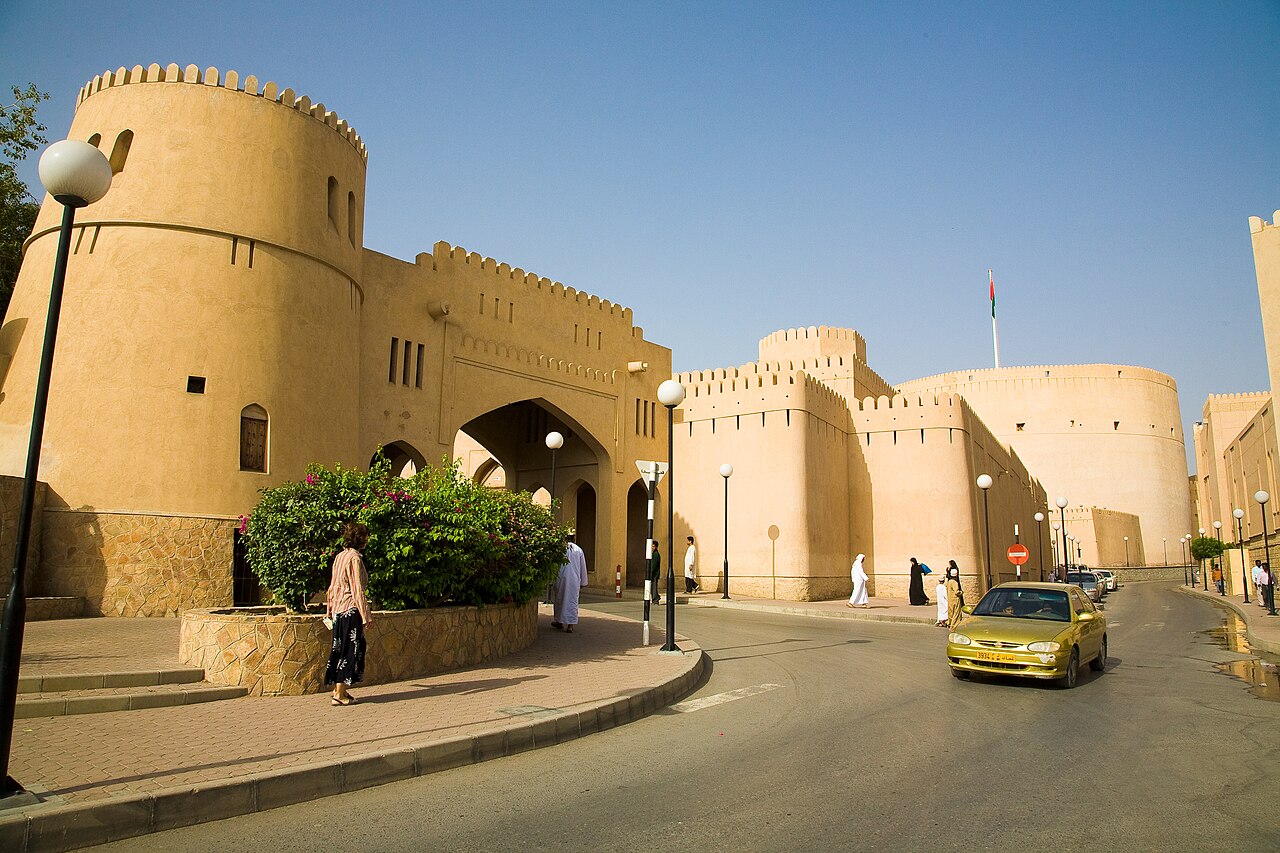
If you want to understand Oman beyond its beaches, mountains, and modern cities, Nizwa Fort is one of the best places to begin.
Standing in the heart of Nizwa in Oman’s Al Dakhiliyah Governorate, the fort is more than a historic building. It tells the story of a city that once played an important role in Omani government, religion, trade, education, and everyday life.
Its huge circular tower dominates the old quarter of Nizwa, while the traditional Nizwa Souq sits just beside it. This makes it easy to experience two of Oman’s most recognizable cultural attractions in a single visit.
Built during the reign of Imam Sultan bin Saif Al Ya’rubi in the 17th century, Nizwa Fort is particularly famous for its massive round tower, traditional defensive engineering, thick walls, hidden defensive features, and panoramic views across Nizwa and the surrounding mountains. Oman’s official tourism portal describes the tower as approximately 34 metres high and 45 metres in diameter.
Whether you are planning a day trip from Muscat to Nizwa, exploring Oman on a private tour, or creating a longer itinerary through the Al Hajar Mountains, Nizwa Fort deserves a place on your travel list.
Why Is Nizwa Fort Famous?
Nizwa Fort is famous for its unusual circular tower and sophisticated defensive architecture.
Unlike many traditional forts built mainly around rectangular walls and smaller watchtowers, the main tower at Nizwa is enormous. Its elevated position allowed defenders to observe the surrounding settlement, palm plantations, roads, and approaches to the city.
The fort was not designed only for military protection. It also served administrative and residential purposes and was connected to the political importance of Nizwa during an influential period of Omani history. Official tourism information notes that the complex included spaces associated with governance, family life, storage, imprisonment, crafts, and other functions.
Today, visitors can walk through rooms, courtyards and defensive areas while learning how people lived and protected the city centuries ago.
That combination of history, architecture and living Omani heritage is what makes Nizwa Fort one of the most popular historical attractions in Oman.
Nizwa Fort History
The history of Nizwa Fort is closely connected to the Ya'rubi period in Oman.
The main fort was constructed in the mid-17th century during the reign of Imam Sultan bin Saif bin Malik Al Ya'rubi, who ruled from 1649 to 1679. Oman’s official tourism sources date the main structure to this period, with another official destination listing identifying 1656 as the year associated with its construction.
Nizwa itself had already been an important settlement long before the construction of the present fort.
Its location near the mountains and along routes connecting different parts of Oman made the city important for trade, agriculture and regional movement. Nizwa also developed a strong reputation as a centre of religion and learning.
The fort therefore represented much more than military strength. It reflected Nizwa's political and cultural importance.
Even today, walking through the structure gives visitors an unusually tangible connection to Oman’s past.
Nizwa Fort Architecture : What Makes It Special?
The first thing most visitors notice is the enormous round tower.
According to Experience Oman, the tower rises approximately 34 metres and has a diameter of about 45 metres. The walls were constructed using stone and traditional Omani building materials, including sarooj, a material historically used in local construction.
The design demonstrates how defensive architecture evolved to respond to different forms of warfare.
Cannon openings provided defenders with wide coverage around the fort. Narrow passages, fortified doors and carefully designed entrances made it difficult for attackers to move freely through the building.
But Nizwa Fort does not feel like a simple military ruin.
Inside, visitors encounter rooms, storage areas, traditional exhibits and spaces that help explain domestic and administrative life. This contrast between the imposing exterior and the human scale of the interior is one of the most interesting parts of the visit.
When you finally reach the upper levels, the view opens across the old city, date palms, nearby mosque architecture and the mountains in the distance.
It is one of the best places in Nizwa for photography.
What to See Inside Nizwa Fort
Allow enough time to explore rather than simply walking up the tower and leaving.
The experience is much better when you pay attention to the details: traditional doors, narrow stairways, defensive openings, courtyards, heritage rooms and exhibits explaining historical life in Nizwa.
The official tourism listing also mentions areas such as the Imam's Room, heritage rooms, weapon storage areas, traditional craft workshops and spaces connected with Omani halwa production. Guided tours are available on request.
For families, the fort can also be an enjoyable introduction to Omani history because many of its stories can be understood visually rather than only through museum displays.
Nizwa Fort Opening Hours
One of the most common questions travelers search before visiting is: What time does Nizwa Fort open?
At the time of writing, Oman’s official tourism website lists the opening hours as 8:00 AM to 8:00 PM from Saturday to Thursday. On Friday, the published hours are 8:00 AM to 11:30 AM and 1:30 PM to 8:00 PM.
Opening times can change during public holidays, Ramadan, special events or operational periods, so it is sensible to confirm the schedule shortly before your visit.
Arriving earlier in the day is particularly useful if you also plan to explore Nizwa Souq and continue towards another destination such as Birkat Al Mouz or Jabal Akhdar.
Nizwa Fort Tickets and Entrance
Tickets for Nizwa Fort can be obtained at the reception desk according to the current information published by Experience Oman. Guided visits are also available upon request.
Ticket prices can vary by visitor category, package or promotion, so checking the current rate before traveling is preferable to relying on an old price found in a travel blog.
If you are visiting Nizwa as part of an organized Oman tour, your tour operator can also clarify whether entrance tickets are included in your package.
Best Time to Visit Nizwa Fort
The best period to visit Nizwa Fort is generally during Oman’s cooler months.
Experience Oman recommends October to April as the preferred visiting season.
During these months, exploring the fort, souq and surrounding old town is usually more comfortable than during the hottest part of summer.
Morning is an excellent option for travelers who want to combine the fort with the nearby market. Later in the afternoon can also be attractive for photography as the changing light brings out the warm tones of Nizwa’s traditional architecture.
If your itinerary includes Jabal Akhdar, starting your journey early gives you more time to experience both Nizwa and the mountain region without rushing.
How to Get to Nizwa Fort from Muscat
Nizwa is easily accessible by road from Muscat and is one of the most popular cultural day trips from Oman’s capital.
Depending on your starting point, traffic and stops along the way, the drive generally takes around one and a half to two hours.
This makes Muscat to Nizwa Fort a practical full-day trip.
Travelers can drive independently, arrange private transportation or join a guided tour. A private tour is particularly useful if you want to combine several attractions because you do not need to manage individual transfers or navigation between destinations.
For international visitors with limited time in Oman, combining Nizwa with Birkat Al Mouz and Jabal Akhdar creates a strong introduction to the country's forts, traditional settlements and mountain landscapes.
Nizwa Fort and Nizwa Souq
One of the biggest advantages of visiting Nizwa Fort is its location next to Nizwa Souq.
You do not need to choose between a historical attraction and a traditional market. They can easily be experienced during the same stop.
Nizwa Souq is known for traditional Omani products, handicrafts and local goods, while the wider area reflects the city's long commercial heritage. The official tourism portal specifically highlights the souq beside the fort as part of the overall cultural experience.
Walking from the fort into the market also gives the visit a more natural rhythm. After exploring defensive architecture and historical rooms, you return to a living part of modern Nizwa where local commerce continues around you.
This is one reason a visit to Nizwa feels different from visiting an isolated archaeological site.
Things to Do Near Nizwa Fort
Nizwa Fort can easily become the starting point for a wider journey through Al Dakhiliyah.
After visiting the fort and Nizwa Souq, travelers can continue towards Birkat Al Mouz, a historic settlement known for traditional architecture and falaj irrigation systems, or travel into the mountains toward Jabal Akhdar.
Visitors interested in Omani forts can also extend their journey toward Bahla Fort and Jabreen Castle, making the region particularly rewarding for cultural travelers.
The Al Dakhiliyah Governorate is home to several major heritage attractions, including Nizwa Fort, Bahla Fort, Jabreen Castle and other historic sites.
Nizwa Fort or Bahla Fort: Which One Should You Visit?
Both are worth visiting, but they offer different experiences.
Nizwa Fort is especially convenient for first-time visitors because it sits directly beside Nizwa Souq and can easily be combined with other attractions around Nizwa.
Bahla Fort is particularly significant for travelers interested in Oman’s broader architectural heritage. Experience Oman describes Bahla Fort as Oman’s first UNESCO-listed site.
Rather than treating them as alternatives, travelers with enough time can visit both and gain a better understanding of how fortifications developed across inland Oman.
Is Nizwa Fort Worth Visiting?
Yes, especially if you want to experience Oman’s history rather than seeing only its landscapes.
Nizwa Fort brings several sides of Oman together in one location: architecture, military history, traditional culture, panoramic views and a historic marketplace.
It is also easy to include within a day trip from Muscat.
For first-time travelers, it provides useful cultural context before visiting mountain villages, forts, wadis and other heritage destinations around the country.
You do not need to be deeply interested in history to enjoy it. The scale of the tower, the views from the top and the atmosphere of old Nizwa make the experience memorable on their own.
Photography at Nizwa Fort
Photography is officially permitted at Nizwa Fort.
Some of the strongest compositions come from the upper parts of the fort, where traditional buildings and palm trees spread out beneath the Hajar Mountains.
The tower itself is also impressive from outside, especially when photographed with the surrounding streets and old-quarter architecture rather than in isolation.
For travel photographers, including some of the surrounding city in the frame helps communicate what makes Nizwa special: the fort remains part of a living city rather than standing alone in the desert.
What to Wear When Visiting Nizwa Fort
Comfortable clothing and walking shoes are recommended because exploring the fort involves stairs and uneven historic surfaces.
Oman is a welcoming but culturally conservative country, so visitors should choose respectful clothing when visiting traditional towns, cultural attractions and religious areas.
Lightweight clothing works well for much of the year, while a hat, sunglasses and water are useful when spending time outside.
During the cooler winter months, temperatures can become more comfortable in Nizwa and noticeably cooler if your trip continues into the mountains.
How Long Do You Need at Nizwa Fort?
For most travelers, around one to two hours gives enough time to explore Nizwa Fort comfortably.
However, you should allow additional time for Nizwa Souq, photography and walking around the old quarter.
Travelers who are particularly interested in Omani history may want to stay longer, especially if they take a guided tour.
A visit should not feel rushed. Many of the fort’s most interesting details are found in smaller rooms, passages and architectural features rather than only at the top of the main tower.
A Perfect Nizwa Day Trip from Muscat
A well-planned Nizwa day trip can combine culture, history and nature without trying to fit too many destinations into a single day.
A comfortable route is to travel from Muscat toward Nizwa in the morning, explore Nizwa Fort and Nizwa Souq, continue toward Birkat Al Mouz and then head into the dramatic mountain landscapes around Jabal Akhdar.
This combination works particularly well because each destination offers something different: Nizwa introduces Oman’s history, the souq adds local culture, Birkat Al Mouz shows traditional settlement life, and Jabal Akhdar reveals an entirely different side of Oman’s geography.
Visit Nizwa Fort with Spring Tours Oman
Exploring Nizwa independently is possible, but a private tour makes it easier to understand the places you are seeing and combine several destinations efficiently.
Spring Tours Oman offers travelers the opportunity to discover Nizwa and the surrounding region with organized transportation and a carefully planned route.
A visit can combine Nizwa Fort, Nizwa Souq, Birkat Al Mouz and Jabal Akhdar, creating a full-day experience that moves naturally from Omani history and culture into the landscapes of the Al Hajar Mountains.
Whether you are staying in Muscat for a few days or building a longer Oman itinerary, our team can help you experience more than just the famous landmarks.
Discover Oman. Experience More.