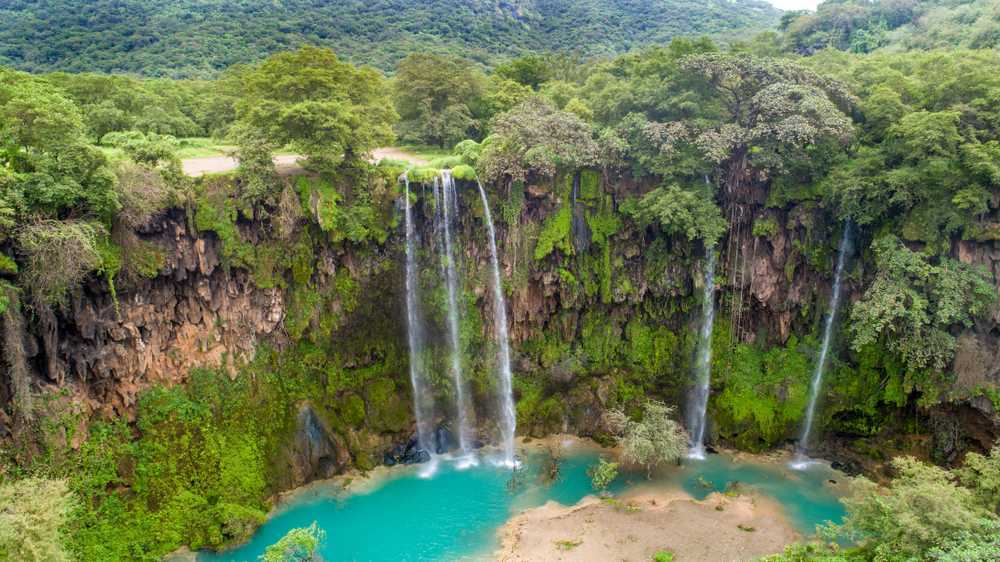
The weather in Salalah is very different from many other destinations in Oman and the Arabian Peninsula. Salalah has warm, sunny winters, hot periods before summer, and the famous Khareef season, when mist, light rain, low clouds and cooler temperatures transform the mountains and valleys around the city into green landscapes.
For travelers looking for greenery, waterfalls and misty mountain views, the best time to visit Salalah is usually during Khareef from June to September, with July and August among the most popular months.
For travelers who prefer sunshine, beaches, desert adventures and clearer skies, October to April is an excellent time to visit Salalah.
This unusual seasonal variety makes Salalah a destination that can offer completely different travel experiences depending on the month you choose.
What Is the Weather Like in Salalah?
Salalah is located in the Dhofar Governorate in southern Oman, facing the Arabian Sea. Its coastal position and nearby mountains create a climate that is noticeably different from northern Oman.
While much of the Arabian Peninsula experiences extremely hot and dry conditions during summer, Salalah is influenced by the seasonal monsoon known locally as Khareef.
During Khareef, clouds gather around the Dhofar Mountains, temperatures become milder, humidity increases and fine drizzle can cover the mountain roads and countryside.
This seasonal weather creates Salalah's famous green scenery.
Outside Khareef, the weather becomes much sunnier and drier. Winter days are generally warm and comfortable, making Salalah particularly attractive for sightseeing, beaches, outdoor tours and desert experiences.
What Is the Best Time to Visit Salalah?
The best time to visit Salalah depends on what you want to experience.
Visit Salalah from June to September for Khareef
Choose this period if you want:
- Green mountains
- Mist and clouds
- Seasonal waterfalls
- Flowing springs and wadis
- Cooler summer weather
- Scenic mountain drives
- Khareef atmosphere
- Nature photography
Khareef is one of the main reasons travelers from Oman, the UAE, Saudi Arabia and other GCC countries travel to Salalah during summer.
Visit Salalah from October to April for Sunshine
Choose this period if you want:
✅ Clearer skies
✅ Sunny beaches
✅ Comfortable sightseeing weathe
✅ Desert safaris
✅ Outdoor activities
✅ Coastal drives
✅ Swimming and snorkeling
✅ Fewer misty days
For many international visitors, the months between October and March provide an excellent combination of warm temperatures, sunshine and comfortable outdoor conditions.
When Is Khareef Season in Salalah?
The Khareef season in Salalah generally begins around mid-June and continues into September.
Khareef is a seasonal monsoon phenomenon unique within Oman. Instead of experiencing the intense summer heat common across much of the region, parts of Dhofar receive moisture, cloud cover, fog and drizzle.
As Khareef develops, dry mountain slopes gradually become green.
The transformation is not instant.
Travelers arriving very early in June may see the beginning of the seasonal change, while July and August normally offer a stronger Khareef atmosphere. Green landscapes can remain visible into September as the season gradually ends.
This seasonal transformation is one of the most remarkable natural experiences in Oman. Oman’s official tourism information describes Khareef as running from around mid-June to September, with southern Oman experiencing much milder conditions than many lowland areas elsewhere in the country.
What Is the Temperature in Salalah During Khareef?
One of the biggest reasons for Salalah's popularity during summer is its comparatively mild Khareef climate.
During the Khareef period, visitors can often experience temperatures roughly in the 20°C to high-20s°C range, although daily conditions vary depending on location, elevation, cloud cover and weather patterns.
The mountains can feel noticeably cooler because of fog, wind and moisture.
That means a summer trip to Salalah can feel completely different from a summer holiday elsewhere in the Gulf.
Official Oman tourism guidance notes that Dhofar can experience Khareef temperatures of approximately 20°C to 28°C, alongside cloud cover, humidity and lush vegetation.
Salalah Weather by Month
Understanding Salalah weather by month can help you choose the right holiday based on your preferred activities.
♦️Salalah Weather in January
January is one of the most pleasant months for visiting Salalah.Days are generally warm, while evenings can feel cooler. The weather is suitable for city tours, beaches, archaeological sites, mountain viewpoints and outdoor dining.January is particularly attractive for travelers escaping colder winter destinations.
♦️Salalah Weather in February
February continues the pleasant winter conditions.Expect plenty of opportunities for outdoor sightseeing, coastal trips and desert excursions. Humidity is generally less noticeable than during Khareef, and skies are often clearer.It is an excellent month for combining East Salalah, West Salalah and desert tours.
♦️Salalah Weather in March
Temperatures begin to rise in March, but conditions can still be comfortable for most activities.This is a good period for travelers interested in beaches, cultural attractions, mountain drives and full-day sightseeing.
♦️Salalah Weather in April
April is warmer, particularly around midday.Morning tours and late-afternoon activities can be especially comfortable. Visitors should carry sunscreen, water and light clothing when spending long periods outdoors.
♦️Salalah Weather in May
May is typically one of the hotter periods before Khareef becomes established.Landscapes may still look relatively dry, and visitors should not expect the famous peak-Khareef greenery yet.May can nevertheless be suitable for travelers who prefer fewer crowds and are comfortable with warmer weather.
♦️Salalah Weather in June
June is a month of transition.The beginning of Khareef gradually changes the atmosphere. Clouds and mist may appear around the mountains, humidity rises and the landscape begins its seasonal transformation.Travelers specifically visiting for maximum greenery may prefer later in the Khareef season.
♦️Salalah Weather in July
July is one of the most popular months in Salalah.Mist, clouds and green mountain scenery make the region feel dramatically different from most nearby Gulf destinations.Locations such as Wadi Darbat, Jebel areas and seasonal springs become particularly popular.Demand for hotels, rental cars and tours can also rise significantly, so early booking is recommended.
♦️Salalah Weather in August
August is another peak month for experiencing Khareef.Expect cool-looking misty landscapes, lush vegetation and high humidity. Light drizzle is common in some areas, particularly around the mountains.August is ideal for visitors whose priority is experiencing the classic green Salalah landscape.
♦️Salalah Weather in September
September is a transitional month as Khareef begins to weaken.The landscape can remain beautifully green while periods of sunshine gradually increase.For travelers who want to see green scenery but prefer conditions that may be less dominated by mist, September can be an attractive option.
♦️Salalah Weather in October
October marks a significant change.Skies generally become clearer, humidity begins to ease and the weather becomes increasingly suitable for beaches and outdoor exploration.The landscape may still retain some greenery from Khareef, especially earlier in the month.
♦️Salalah Weather in November
November offers excellent conditions for many Salalah activities.It is a particularly good month for beaches, sightseeing, cultural tours, desert safaris and exploring the Dhofar coastline.The combination of sunshine and comfortable temperatures makes November popular with winter visitors.
♦️Salalah Weather in December
December is one of Salalah's most enjoyable winter months.Warm daytime conditions combined with cooler evenings make it easy to explore the city and surrounding attractions.
For travelers looking for winter sun, December can be one of the best times to visit Salalah.
Does It Rain in Salalah?
Yes, but rain in Salalah is different from what many travelers imagine when they hear the word monsoon.
During Khareef, the city and mountains often experience fine drizzle, mist, fog and low clouds rather than continuous heavy tropical rainfall.
Conditions can also vary greatly over short distances.
The city center may experience relatively light conditions while mountain areas are covered in thick fog.
Occasionally, stronger weather systems can produce heavier rainfall. Travelers should always follow local weather and safety information, especially before entering wadis or remote mountain areas.
Why Does Salalah Become Green During Khareef?
Salalah's greenery is created by the interaction between moist air from the Arabian Sea and the Dhofar Mountains.
During the seasonal monsoon, moisture reaches the coastal mountains. Low clouds, fog and drizzle provide water to vegetation that remains dry during much of the year.
Over several weeks, hillsides and valleys become increasingly green.
This creates the famous images of green Salalah during Khareef that attract visitors from across the Middle East.
The seasonal climate can also support flowing springs and waterfalls at certain natural attractions.
Is Salalah Hot in Summer?
Salalah can be warm during summer, particularly before Khareef fully develops.
However, July and August can feel substantially milder than many other Gulf destinations because of Khareef.
Cloud cover and lower daytime temperatures provide relief from the intense summer sun experienced elsewhere in the region.
Humidity, however, can be high.
Visitors should therefore expect a climate that may feel cool and misty in the mountains but humid closer to the coast.
Is Salalah Cold During Khareef?
Salalah is not normally cold in the way a European winter destination is cold.
However, mountain areas during Khareef can feel surprisingly cool because of:
🔺Wind
🔺Fog
🔺Drizzle
🔺High humidity
🔺Reduced sunlight
🔺Higher elevation
A light jacket can therefore be useful, especially for mountain tours or early-morning trips.
What Should You Wear in Salalah?
What to wear in Salalah depends heavily on the season.
- During Khareef
Consider bringing:
◾️Light breathable clothing
◾️A light jacket
◾️Comfortable walking shoes
◾️Shoes with good grip
◾️A light rain jacket
◾️Extra clothing for children
◾️Waterproof protection for cameras and electronics
Mountain viewpoints and wet walking areas can become slippery during Khareef.
- From October to May
Light summer clothing is normally suitable during the day.
Also consider:
◾️Sunglasses
◾️Sunscreen
◾️Hat
◾️Comfortable walking shoes
◾️Light evening layer during winter
◾️Swimwear for appropriate beach or resort areas
Visitors should also respect local Omani customs by choosing suitable clothing when entering villages, mosques and cultural sites.
Best Places to Visit in Salalah During Khareef
Weather can completely change the character of many attractions in Dhofar.
Popular Khareef destinations include:
✔️Wadi Darbat
One of Dhofar's most famous natural attractions, Wadi Darbat becomes particularly scenic during the green season.
✔️Ain Razat
A popular spring surrounded by mountain landscapes and vegetation.
✔️Jebel Dhofar
Driving through the Dhofar Mountains during Khareef offers foggy roads, green hills and dramatic viewpoints.
✔️Mughsail Beach
West of Salalah, Mughsail combines cliffs, ocean scenery and one of Dhofar's best-known coastal landscapes.
✔️Ain Garziz
A popular natural area that can be included in West Salalah itineraries.
Because fog can reduce visibility on mountain roads during Khareef, visitors should drive carefully or explore with an experienced local driver or guide.
Best Things to Do in Salalah in Winter
When Khareef ends, Salalah becomes an excellent destination for sunny outdoor travel.Some of the best winter experiences include:
⭕West Salalah tours
⭕East Salalah tours
⭕Salalah city tours
⭕Empty Quarter desert safaris
⭕Sunset desert safaris
⭕Mughsail Beach
⭕Mirbat
⭕Taqah
⭕Wadi Darbat
⭕Frankincense heritage sites
⭕Archaeological attractions
⭕Beach activities
⭕Dolphin watching
⭕Snorkeling
Winter weather makes it easier to combine several different landscapes within the same trip.
In only a few days, visitors can experience beaches, mountains, desert dunes, historical sites and traditional Omani culture.
Is Salalah Worth Visiting Outside Khareef?
Absolutely.
A common misconception is that Salalah is only worth visiting during Khareef.
In reality, Salalah is a year-round destination.
Khareef is ideal for travelers seeking green landscapes and misty weather, while winter provides better conditions for travelers focused on beaches, desert safaris and sunshine.
The official Oman tourism platform also highlights both Khareef and the October-to-May period as distinct travel experiences, with winter conditions particularly suitable for outdoor exploration.
Is July or August Better for Salalah?
Both months are excellent for experiencing Khareef.
Choose July if experiencing the developing peak of the green season is your priority.
Choose August if you want established green landscapes and classic misty Khareef conditions.
However, both July and August are popular travel periods. Hotels, vehicles and tours can become busier than during other months.
If you plan to travel during peak Khareef, booking transportation, accommodation and tours in advance is strongly recommended.
Is September a Good Time to Visit Salalah?
Yes.
September can be one of the most interesting months for travelers who want a balance between Khareef landscapes and improving visibility.
Green scenery may remain while the frequency of mist and drizzle gradually decreases.It can therefore be a useful alternative for travelers who cannot visit during July or August.
Is December a Good Time to Visit Salalah?
Yes.
December is an excellent month to visit Salalah.
The weather is generally comfortable for:
⚫Beaches
⚫Sightseeing
⚫Hiking
⚫Desert tours
⚫Mountain trips
⚫Cultural attractions
⚫Outdoor dining
December is particularly suitable for international travelers looking for a warm winter destination.
Salalah Weather vs Muscat Weather
Although Salalah and Muscat are both in Oman, their summer weather can be dramatically different.
Muscat has a hot desert climate during summer, while Salalah experiences the Khareef monsoon.
This is why travelers may find sunny, very hot conditions in northern Oman while simultaneously seeing cloudy skies, green mountains and drizzle in southern Dhofar.
The geographical contrast is one of the most distinctive features of traveling through Oman.
How Weather Affects Your Salalah Tour
The best Salalah itinerary should always consider the season.
During Khareef, green mountain attractions, springs and scenic drives become major priorities.
During the sunnier winter months, travelers can comfortably combine:
East Salalah + West Salalah + Empty Quarter Desert Safari
This combination provides an excellent introduction to the variety of Dhofar.
Weather conditions can also affect road visibility, walking conditions and access to certain natural areas. For this reason, local planning is particularly valuable during changing weather.
Explore Salalah with Spring Tours Oman
At Spring Tours Oman, we help visitors experience Salalah according to the season, weather conditions and type of holiday they want.
Our Salalah experiences include city tours, East and West Salalah excursions, mountain routes, desert safaris, transfers, car rental and customized Oman travel services.
Whether you are visiting during the misty Khareef season or traveling to Salalah for winter sunshine, choosing the right itinerary can help you experience more of Dhofar within your available time.
Explore Salalah's mountains, beaches, wadis, cultural landmarks and desert landscapes with a trip designed around the season.
Ready to discover Salalah? Chat with Spring Tours Oman on WhatsApp and let our team arrange your tours, transfers and local experiences.
+96877270644